One Hubei Ash (Fraxinus hupehensis)
2026 · month 3 of 12
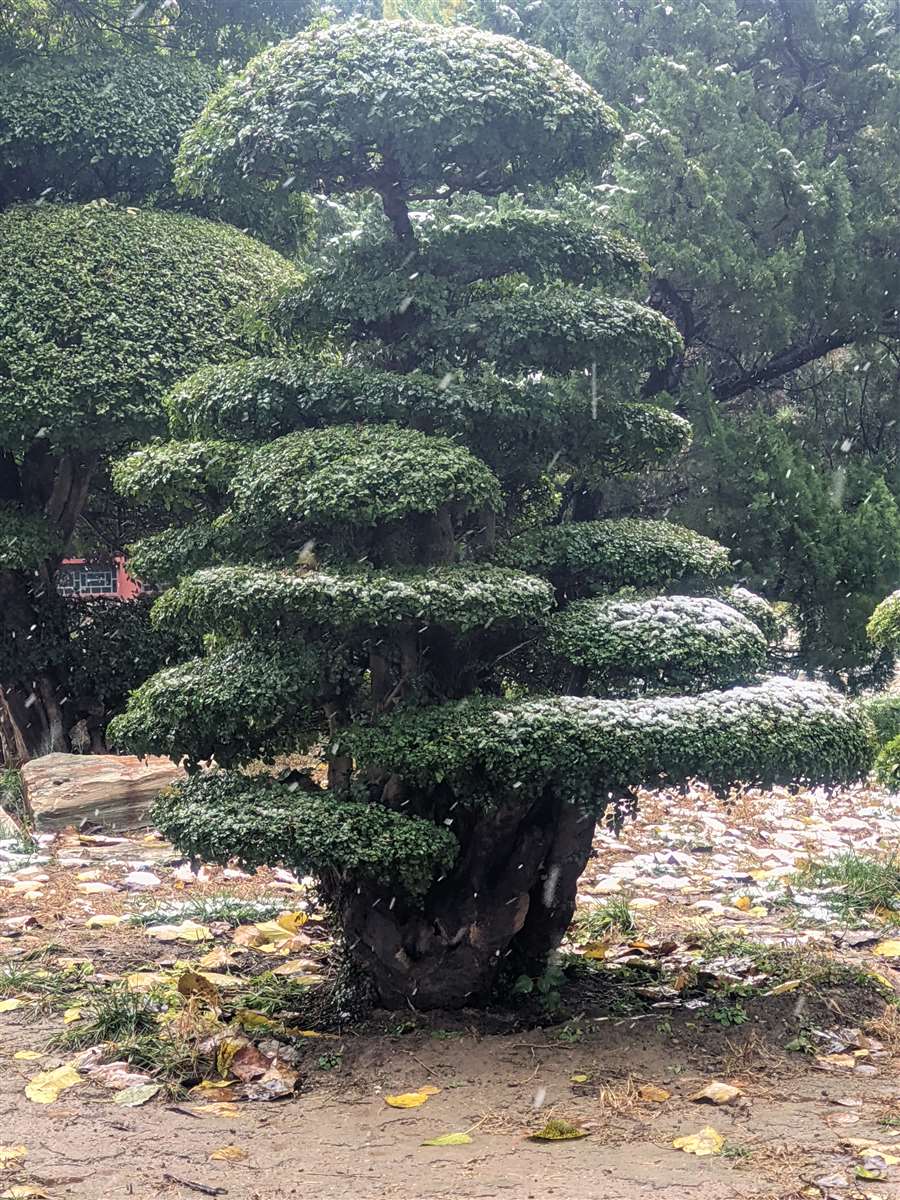
Early winter, the first snowfall. The snow is light, and the temperature is not especially low. Snowflakes land on the ground and melt quickly. The same goes for this tree: only the lowest part of its crown holds a little fresh snow. The temperature is around 3°C. Its leaves stay dark green. It has a tower-shaped crown, a form shaped by pruning. The bottom layer is wider in diameter, catching a small amount of snow.
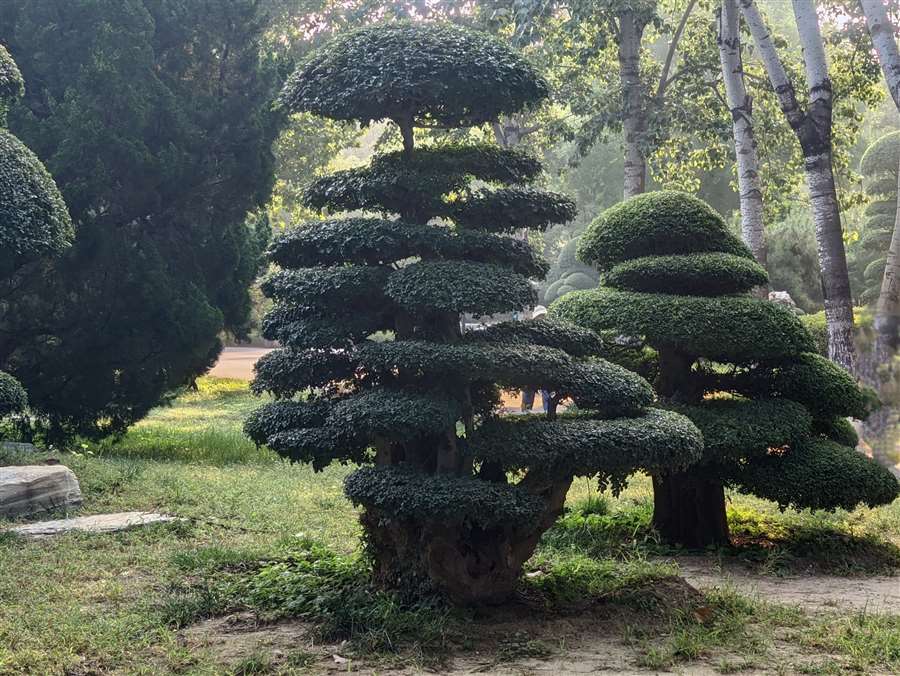
Early fall, foliage is deep green. Its form remains largely unchanged, likely maintained by gardener pruning. This is a sculpted specimen tree. I wonder what it looks like in winter.
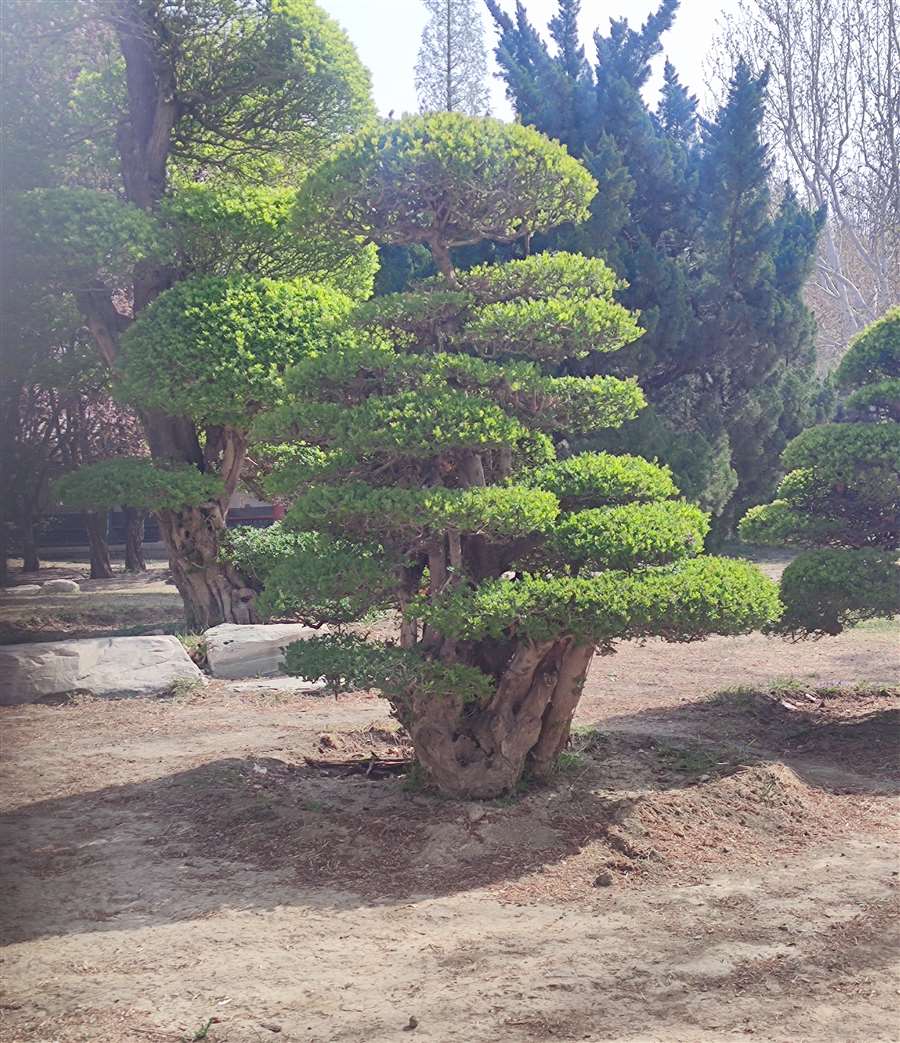
This tree stands in a public park, planted on an open lawn where wild birds often come to forage on the grass. I was captivated by its unique shape. Artfully hand-pruned, it possesses an aged, simple elegance. It has a thick trunk and radiates strong vitality. This photograph was taken in April. I initially wondered if this plant could survive local winters, where temperatures can drop to -20°C. However, since it is established within the park’s landscape, it should be cold-hardy. After checking references, this tree is likely *Fraxinus hupehensis* (Hubei Ash).
— next visit: December 2026 —
More notes: One Chinese Wisteria (Wisteria sinensis) · One Lotus Bed on Small Lake · One Twisted Wisteria Vine (Wisteria sinensis) · Field Notes