Field Notes
2026 · month 1 of 12
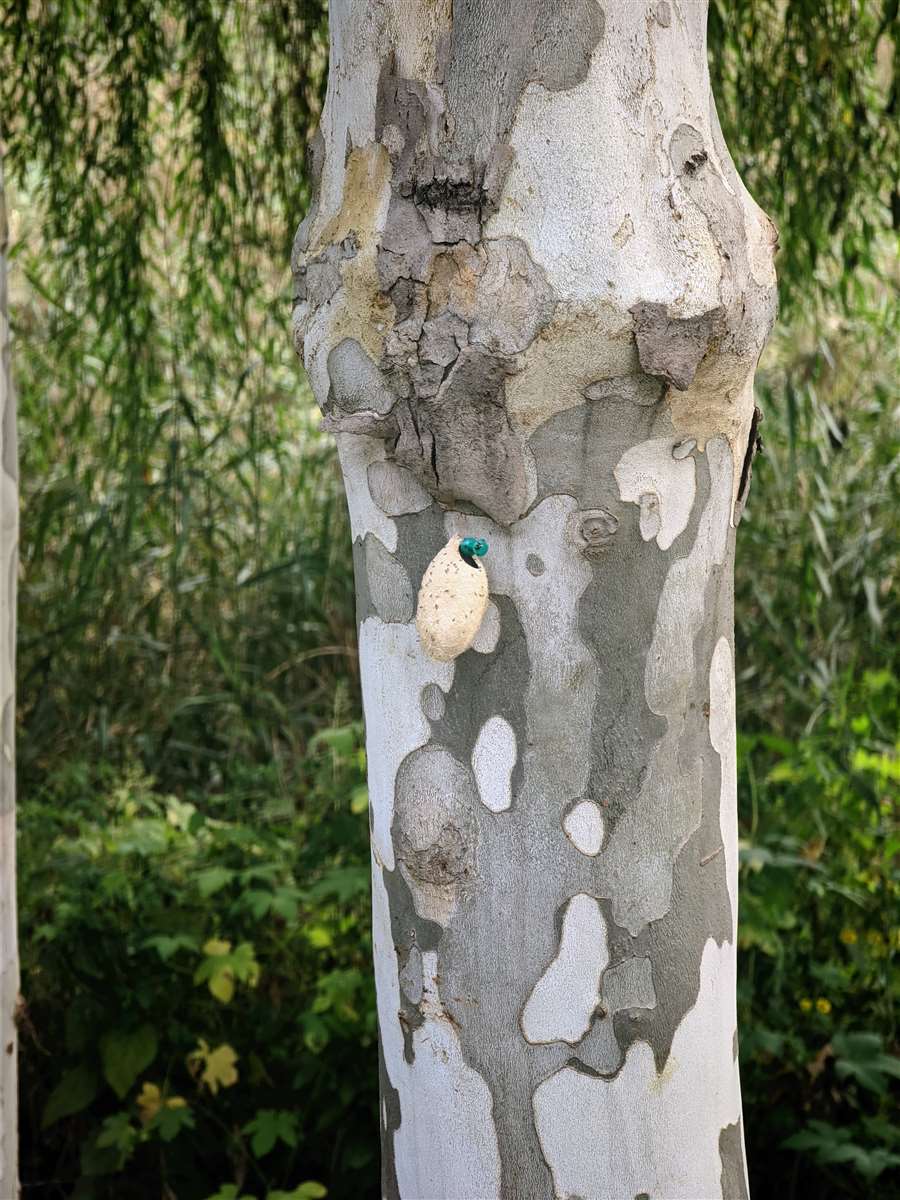
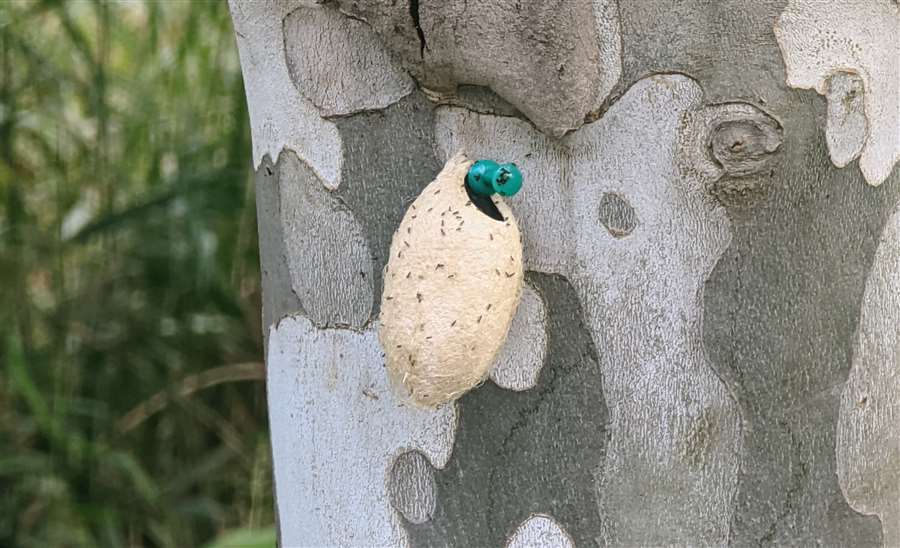
From a distance it looked like a large insect stuck to the trunk, perfectly still. Up close, it turned out not to be an insect at all — its surface is covered with countless tiny parasitoid cocoons. According to what I've read, this is a biological pest-control setup: the pupa is used to rear parasitic wasps, and once the small wasps mature they help suppress fall webworms, which damage trees. The tree is protected this way, though the rearing pupa is spent in the process. I saw several of these rearing pupae around this park. The area is quiet, with few visitors. A path loops around an artificial lake, the shores lined with reeds. Such habitat may support many fall webworms, which is why this targeted control is needed. I don't recall seeing this kind of setup in other green belts — or maybe I simply never noticed it before. I came across it by chance and found it genuinely fascinating.
— next visit: October 2026 —
More notes: One Hubei Ash (Fraxinus hupehensis) · One Chinese Wisteria (Wisteria sinensis)